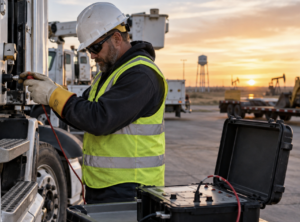
Oklahoma’s transportation and logistics industry depends on far more than highways, trucks, warehouses, and distribution centers. Behind the scenes, utility crews, municipal fleets, telecommunications contractors, electrical service companies, energy operators, and specialized transportation businesses rely on equipment that must perform safely around energized electrical systems.
That makes dielectric testing an important part of equipment maintenance and workplace safety, particularly in areas such as Woodward, where transportation, agriculture, utilities, energy, construction, and industrial services often overlap.
Woodward occupies an important position in northwestern Oklahoma, serving businesses and communities across a broad rural region. Fleet vehicles and specialized equipment operating in this part of the state may travel considerable distances between jobs, making dependable equipment especially important. When trucks, insulated aerial devices, protective equipment, or electrical components are expected to operate around high-voltage environments, a failure can have consequences that extend far beyond an unexpected maintenance bill.
As Oklahoma continues strengthening its transportation and logistics infrastructure, equipment safety remains part of the larger conversation about keeping workers protected and operations moving.
Oklahoma’s Transportation Network Depends on Reliable Equipment
Oklahoma has a geographic advantage that has made transportation and logistics a major part of the state’s economy. The Oklahoma Department of Commerce describes the state as a centrally positioned transportation hub supported by interstate highways, railroads, inland waterways, and aviation infrastructure. Its transportation and logistics resources highlight Oklahoma’s connections to major markets throughout the United States.
Three major interstate corridors—I-35, I-40, and I-44—help connect Oklahoma businesses with destinations throughout the country. The state also has thousands of miles of highways, extensive freight rail infrastructure, airports, and inland ports.
Wikipedia’s overview of Oklahoma also describes the state’s transportation system as a network of interstate highways, rail lines, airports, inland ports, and public transportation infrastructure.
Those systems depend on equipment that works when it is needed. Transportation safety is not limited to brakes, tires, engines, lights, and mechanical inspections. Many fleets include specialized vehicles with electrical insulation or components designed to protect workers from electrical hazards.
Utility bucket trucks are an obvious example. Telecommunications vehicles, municipal service trucks, construction equipment, maintenance fleets, and equipment used by electrical contractors may also operate near energized systems.
Routine dielectric testing provides another layer of protection for organizations responsible for this equipment.
What Dielectric Testing Does for Specialized Fleet Equipment
Dielectric testing is designed to evaluate whether insulating materials or equipment can withstand specified electrical voltages without breaking down.
For equipment that may be used near energized conductors, insulation is not simply another feature. It can become an important part of the protective system separating a worker from potentially dangerous electrical energy.
Over time, equipment is exposed to conditions that can affect performance. Road vibration, moisture, contamination, heat, cold, ultraviolet exposure, physical damage, repairs, aging materials, and ordinary wear can all influence the condition of components.
A piece of equipment may appear acceptable during a basic visual inspection while still having weaknesses that deserve closer evaluation.
For businesses operating fleets in northwestern Oklahoma, professional Dielectric Testing Woodward, OK can help determine whether applicable equipment continues to provide the electrical insulation performance expected of it.
Testing is especially important because electrical insulation problems are not always visible. Establishing a documented testing and maintenance program can help fleet managers identify potential issues before equipment is placed into demanding work environments.
Woodward Fleets Operate in Demanding Conditions
Woodward is surrounded by industries that depend heavily on vehicles and specialized equipment. Agriculture, energy production, construction, utilities, telecommunications, municipal services, transportation, and industrial maintenance all contribute to the regional economy.
That combination creates demanding operating conditions.
Vehicles may spend significant amounts of time traveling between communities, job sites, substations, utility corridors, industrial properties, farms, energy installations, and remote locations. Equipment can encounter dust, temperature changes, storms, moisture, road debris, vibration, and extended periods of outdoor exposure.
Oklahoma’s freight network also demonstrates just how important dependable transportation infrastructure is to the state. The Oklahoma Department of Transportation maintains a dedicated Freight Mobility program focused on the movement of goods and the state’s multimodal transportation system.
For fleet operators, the reliability of individual vehicles and equipment ultimately contributes to the reliability of the larger transportation system.
A vehicle that is unavailable because of an equipment problem can mean a delayed repair, interrupted utility work, postponed construction, missed delivery, or additional travel for another crew.
Preventive inspection and testing programs help organizations manage those risks more systematically.
Electrical Safety Is a Fleet Management Issue
Fleet management has traditionally focused on vehicle availability, fuel costs, maintenance schedules, driver safety, inspections, and replacement cycles. Specialized fleets require another level of attention because the equipment mounted on those vehicles may create its own inspection and testing requirements.
Electrical hazards deserve particular attention because the consequences of equipment failure can be severe.
The Occupational Safety and Health Administration maintains workplace electrical safety standards intended to protect workers who may encounter electrical hazards on the job. Companies operating specialized equipment should understand the standards and safety requirements that apply to their particular operations.
This matters for transportation and logistics companies because vehicles are often mobile workplaces. A truck may leave a company facility in the morning and spend the rest of the day functioning as a platform for technicians, utility workers, maintenance crews, or contractors.
The safety systems on that vehicle therefore become part of the employer’s overall safety program.
Dielectric testing can support that program by providing documented information about the condition of applicable insulating equipment.
Preventive Testing Can Help Reduce Unexpected Downtime
Equipment downtime has a ripple effect.
When a specialized truck is removed from service unexpectedly, replacing it may not be as simple as assigning another pickup truck from the company parking lot. Bucket trucks, utility vehicles, and other specialized fleet units can have unique configurations and capabilities.
A company may have to reschedule crews, delay service, rent equipment, move vehicles between locations, or postpone projects.
Preventive testing allows companies to approach maintenance before a failure creates an emergency.
That philosophy fits naturally into modern transportation management. Fleets already schedule oil changes, brake inspections, tire replacements, hydraulic service, annual inspections, and other preventive maintenance activities. Electrical safety testing can be incorporated into that broader maintenance strategy when applicable.
The goal is not merely to satisfy a maintenance calendar. It is to understand the condition of critical equipment before it is needed in the field.
Oklahoma’s Logistics Growth Raises the Importance of Safety
Oklahoma continues promoting itself as a strategically located logistics and distribution center.
The Oklahoma Department of Commerce notes that the state provides extensive highway, rail, aviation, and water transportation options. Its distribution and transportation resources emphasize Oklahoma’s position near major markets and its connections through interstate corridors and freight systems.
That logistical advantage attracts businesses that depend on reliable transportation.
Growth in distribution, manufacturing, energy, infrastructure, and industrial activity also means more equipment operating throughout the state. More vehicles, more infrastructure, and more projects increase the importance of strong maintenance and safety practices.
The Federal Motor Carrier Safety Administration also works with state agencies on commercial vehicle safety programs. Oklahoma’s Commercial Vehicle Safety Plan identifies enforcement and safety responsibilities involving commercial motor vehicles and federal motor carrier regulations.
While dielectric testing serves a different and more specialized purpose than traditional commercial vehicle inspections, both reflect the same larger principle: equipment used in transportation and field operations needs appropriate inspection, maintenance, and oversight.
Transportation in Oklahoma Goes Far Beyond Trucking
Oklahoma logistics is genuinely multimodal.
Businesses use highways to reach regional and national markets, but freight also moves through rail corridors and inland waterways. The state’s central location supports distribution operations serving customers across a large portion of the United States.
The Oklahoma Department of Commerce reports that Oklahoma’s transportation infrastructure includes thousands of highway miles, extensive rail service, public-use airports, and inland water transportation through the McClellan-Kerr Arkansas River Navigation System.
Each part of that system relies on supporting industries.
Rail facilities need electrical contractors and maintenance teams. Warehouses depend on power and communications infrastructure. Ports require industrial equipment. Highways need lighting, communications, maintenance, and emergency services. Distribution facilities depend on electricians, utility providers, construction contractors, and telecommunications companies.
Many of those supporting businesses operate specialized fleet vehicles.
Transportation logistics therefore includes far more than the tractor-trailer carrying freight down the interstate. It includes the equipment and crews responsible for maintaining the infrastructure that allows those trucks to move in the first place.
Documentation Matters for Professional Fleet Operations
Testing also creates something that becomes increasingly valuable as companies grow: documentation.
Professional fleet managers need reliable records showing when equipment was inspected, maintained, repaired, and tested. Documentation can help establish maintenance schedules, identify recurring problems, support internal safety programs, and provide management with a clearer picture of equipment condition.
Records can also help companies avoid relying on memory or informal maintenance practices.
This becomes especially important when a fleet contains multiple vehicles, several locations, rotating crews, or equipment that is frequently transported between job sites.
A documented testing history gives managers a more organized way to determine when equipment should be evaluated again.
It also encourages consistency. Instead of testing only after an obvious problem appears, companies can develop structured inspection and testing schedules based on equipment requirements, manufacturer recommendations, applicable standards, and operating conditions.
Woodward’s Regional Role Makes Equipment Readiness Important
Woodward serves as a regional center for a large portion of northwestern Oklahoma. Businesses operating from the area frequently serve customers and projects beyond the immediate city limits.
That creates an additional reason to keep specialized vehicles ready for service.
A crew dispatched to a distant job site cannot easily return to the shop when an equipment problem is discovered. Unexpected failures can become particularly disruptive when workers are operating dozens of miles from their primary facility.
Transportation and logistics operations function most efficiently when safety and maintenance problems are identified before departure rather than after a vehicle reaches a job.
That is one reason preventive testing fits well with professional fleet management.
Infrastructure Investment Works Best When Safety Keeps Pace
Oklahoma continues developing its transportation infrastructure and emphasizing its logistical location.
The state promotes highway access, freight rail, aviation, inland ports, and centralized distribution as competitive advantages for businesses. The Oklahoma Department of Commerce describes Oklahoma as being positioned to connect companies with major domestic and international markets through multiple transportation modes.
Infrastructure expansion creates opportunities, but it also places greater importance on the people and equipment maintaining that infrastructure.
Utility lines must be maintained. Distribution facilities need reliable electrical systems. Communications networks require service. New industrial facilities need contractors. Transportation corridors require continuing maintenance.
A modern logistics network therefore depends on safe support operations.
Dielectric testing is one comparatively small part of that much larger system, but for workers who depend on insulating equipment around energized electrical systems, it can be an important one.
Safer Equipment Supports a Stronger Oklahoma Transportation Network
Transportation safety begins long before a truck enters the highway.
It begins in maintenance facilities, equipment yards, utility departments, contractor shops, warehouses, and fleet offices where decisions are made about inspections, repairs, testing, and preventive maintenance.
For specialized fleets operating around electrical infrastructure, dielectric testing can provide valuable information about whether insulating equipment continues to perform as intended.
Woodward’s location and diverse regional economy make dependable fleet equipment particularly important. Utility companies, contractors, transportation businesses, municipalities, telecommunications providers, agricultural operations, and energy companies frequently rely on vehicles that must travel considerable distances and perform safely under challenging conditions.
As Oklahoma strengthens its position as a transportation and logistics hub, organizations responsible for keeping the state moving have good reason to place equipment readiness alongside speed, efficiency, and productivity.
Conclusion
Oklahoma transportation and logistics depend on thousands of interconnected pieces working correctly every day. Highways, railways, ports, airports, distribution facilities, utilities, contractors, maintenance teams, and specialized fleets all contribute to the movement of goods and services throughout the state.
For companies operating electrical or insulated equipment in and around Woodward, dielectric testing deserves a place within a broader preventive maintenance and safety program.
Proper testing can help identify weaknesses that might otherwise remain unnoticed, support maintenance documentation, reduce the likelihood of unexpected equipment problems, and help companies make informed decisions before specialized vehicles are sent into demanding work environments.
Oklahoma’s logistical strength comes from infrastructure, location, and connectivity, but those advantages ultimately depend on people and equipment doing their jobs safely. In Woodward and throughout the state, maintaining that equipment is an essential part of keeping crews protected, fleets productive, and Oklahoma’s transportation network moving.