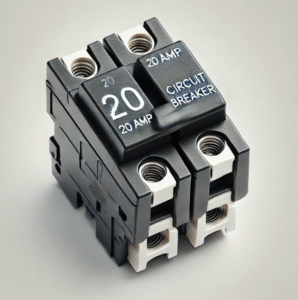
Transportation and logistics centers are the beating heart of global commerce. Every package, pallet, truckload, or container that moves across the country depends on the seamless, uninterrupted operation of warehouses, cross-docks, fulfillment hubs, freight terminals, and distribution centers. Behind that smooth operation is something most people never think about—stable electrical infrastructure. One of the most important components of that infrastructure is the humble 20 amp circuit breaker.
Though small in size, a 20 amp breaker carries an enormous responsibility: powering equipment safely, consistently, and with enough capacity to keep operational workflows moving. When thousands of dollars in freight are being sorted every hour and time-sensitive shipments must stay on schedule, the last thing a logistics center can afford is an electrical failure. This is exactly why the 20 amp circuit breaker is such a standard in the transportation and logistics world.
Below is a detailed exploration of why these facilities rely on 20 amp breakers, how they support operational efficiency, and what makes them essential in a high-demand, high-stakes environment.
The Backbone of Operational Reliability
A transportation or logistics center operates on precision. Conveyor belts must run without interruption. Barcode scanners, label printers, sorting equipment, forklifts, automated guided vehicles (AGVs), small motors, and workstation computers all demand continuous electricity. A 20 amp circuit breaker delivers just the right balance of power capacity and protection for these commonly used devices.
According to the electrical load standards referenced across industrial sectors, a 20 amp breaker is typically used on 12-gauge wiring and supports equipment drawing up to 2,400 watts. This makes it perfect for mid-range operations inside logistics facilities where heavier industrial equipment is powered on separate circuits, and smaller operational systems need dedicated, reliable channels.
Warehouses also follow electrical best practices aligned with industry guidance such as the information found in Wikipedia for transportation systems and infrastructure. Standardizing breaker loads across similar facility sections prevents overloads, reduces risk, and simplifies maintenance.
Supporting Heavy Daily Workloads Without Overloading
Inside a logistics center, equipment doesn’t just operate—it runs constantly. Small machinery, sorting arms, control panels, computer systems, and lighting fixtures often run simultaneously on clustered circuits. A 15 amp breaker may not be enough for this demand, but a 30 or 40 amp breaker would be excessive. A 20 amp breaker hits the sweet spot, providing enough load capacity to keep everything running without tripping unnecessarily.
Continuous workloads need circuits that can withstand:
• Repetitive stopping and starting
• High-frequency equipment cycling
• Long operating hours
• Temperature shifts that affect electrical load
Facilities often reference industry-related news, such as updates from Transport Topics, to stay informed on warehouse technology trends and energy-efficient practices. As automation increases—robotic arms, precision scanners, smart conveyors—the 20 amp breaker remains a dependable choice for mid-level loads.
Powering Automation, Scanning Systems, and Smart Technology
Automation keeps modern logistics alive. From Amazon-scale distribution centers to regional freight terminals, equipment relies on instant, accurate responses.
A 20 amp circuit breaker commonly supports:
• Automated scanning tunnels
• Conveyor control systems
• Small lift equipment
• Vehicle-charging stations for handheld devices
• Workstation power supplies
• Dock leveler controls
• Temperature-monitoring systems for cold storage
Logistics operations also continue adopting smart tech that communicates through cloud-based platforms and IoT devices. These require stable energy flows—no power dips, surges, or failures. Publications such as FreightWaves help these centers keep track of IoT advances and automation breakthroughs. To support these technologies without risking damage or unplanned downtime, 20 amp breakers provide the level of protection needed.
Ensuring Compliance With Safety Standards
Every state and industry has strict electrical codes. Transportation and logistics facilities fall under commercial electrical standards that require circuit distribution to match wiring and equipment specifications.
Using a 20 amp breaker where 20 amp capacity exists in the wiring and load prevents:
• Fires caused by overheated wiring
• Damage to expensive equipment
• Electrical outages that impact shipping schedules
• Safety hazards for employees and forklift operators
• Unexpected tripping that disrupts workflow
Because logistics centers often run around the clock, safety compliance isn’t just about meeting code—it’s about protecting workers and ensuring freight gets where it needs to go. A breaker that is too small will trip constantly, shutting down crucial systems. A breaker that is too large can overload wires, cause heat damage, and create significant fire risks. The 20 amp breaker prevents these issues by matching the most common electrical needs inside industrial and commercial facilities.
Providing Redundancy for Critical Systems
Logistics centers must anticipate the unexpected: late trucks, weather delays, labor fluctuations, or seasonal spikes in volume. What they cannot afford is electrical downtime. Redundant electrical circuits, often running on 20 amp breakers, power mission-critical components such as:
• Communication systems
• Security monitoring
• Dock gates and bay doors
• Network equipment and routers
• Backup servers
• Facility management systems
Even a brief power interruption could cause missed carrier cut-off times or shut down automated sorting lines. Redundancy supported by 20 amp breakers gives logistics centers a reliable way to keep essential systems online, even during maintenance or partial outages.
Flexible Enough for a Variety of Equipment
Transportation and logistics centers rely on equipment that changes frequently. Upgrades, new conveyor lines, additional scanning stations, advanced robotics, and expanded office technology are all normal parts of growth.
The 20 amp breaker helps support this flexibility in several ways:
• It offers enough power for most mid-level equipment without needing rewiring.
• It gives electricians room to add peripherals without overloading.
• It standardizes facility sections so upgrades are easier to plan.
Many facilities rely on larger supply-chain news sources such as Logistics Management to stay informed on facility upgrades and future-ready warehouse designs. As technology evolves, a 20 amp breaker remains compatible with most new systems without requiring major infrastructure changes.
Keeps Operating Costs Manageable
Logistics relies on thin margins. Energy efficiency and cost control matter. While the breaker itself is inexpensive, what it prevents is what makes it a cost-saving necessity.
A 20 amp circuit breaker helps avoid:
• Equipment burnout
• Costly repairs
• Wiring replacements
• Conveyor downtime
• Lost labor hours
• Missed shipment deadlines
Even one equipment failure can lead to thousands of dollars in penalties, rework, and carrier fees. Electricians often design logistics centers with 20 amp circuits precisely because they balance safety, capacity, and efficiency—without requiring oversized, costly infrastructure.
Supports the Fast Pace of Modern Distribution
Modern logistics is faster, smarter, and more automated than ever before. Same-day and next-day delivery expectations mean a distribution center can’t afford electrical inconsistencies. The 20 amp breaker contributes to fast-paced workflow by ensuring stable power to the essential mid-voltage units that keep freight moving.
Facilities depend on:
• Barcode accuracy
• Conveyor precision
• Dock timing
• Automated inventory counts
• Lighting reliability
• Sorting speed
Every one of these functions relies on consistent power delivered safely through the correct breaker size.
Conclusion
Transportation and logistics centers are complex ecosystems powered by technology, automation, and nonstop workflow. To keep these systems operating smoothly, safely, and efficiently, these facilities depend on the reliability of a 20 amp circuit breaker. It provides the right balance of power capacity, protection, and flexibility needed to support everything from scanning systems to conveyor controls to workstations and smart warehouse technology.
This small but essential component helps prevent electrical hazards, ensures operational uptime, and supports the rapid pace that modern distribution demands. In a world where every second counts and every shipment matters, the 20 amp circuit breaker remains a fundamental piece of infrastructure that keeps freight flowing and logistics operations running strong.