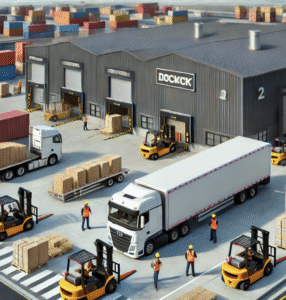
Transportation and logistics companies often focus on moving goods, managing supply chains, and ensuring timely deliveries—but what if there’s more to the story? In many infrastructure projects—such as roads, bridges, warehouses, and distribution centers—the role of construction materials becomes critical. A concrete batch plant, such as those provided by Erie Strayer Co., is not only vital for the construction process itself but can offer substantial value to transportation and logistics firms. From cost savings to operational control, the strategic integration of a batch plant can serve as a competitive advantage in a tight market.
In this article, we’ll explore why transportation and logistics companies can benefit from investing in or partnering with a concrete batch plant, using the expertise of firms like Erie Strayer Co. as a model. You’ll discover how it supports better cost management, improved timelines, quality control, and even sustainability. Plus, we’ll tie in current industry news to demonstrate just how interconnected logistics and infrastructure services truly are. 😊
Strategic Cost Savings and Efficiency
Transportation costs are a significant hurdle for logistics companies, and construction materials often add to that burden when sourced externally.
Reduced Transportation Costs
By having access to—or owning—a concrete batch plant, a transportation and logistics company can dramatically reduce transport expenses. When concrete is mixed and delivered directly from the on-site or nearby batch plant, the need to haul materials long distances vanishes. That slashes fuel consumption, vehicle wear-and-tear, and labor costs. One analysis highlights how mobile batching plants mitigate these transportation challenges by producing concrete on-site. Gajjar Equipments Pvt. Ltd.
Control Over Project Timelines
A transportation company involved in construction—in building roads, terminals, or hubs—often suffers delays when concrete deliveries are late or inconsistent. On-site production enables better control over schedules, minimizing bottlenecks and allowing continuous progress. Research shows batching plants have a direct impact on construction timelines, and optimizing them leads to better efficiency and less downtime. aimixgroup.com
Return on Investment (ROI)
Especially in scenarios with recurring or large-scale infrastructure needs, investing in a batch plant can pay for itself. Producing your own concrete affords both economies of scale and predictability. Industry experts argue that for operations needing high-volume concrete, a batch plant ultimately yields long-term cost savings. Mixer Systems
Enhanced Quality Control and Reliability
Logistics infrastructure must be robust—think durable pavements, sturdy loading docks, and solid foundations for warehouses.
Consistency in Mix and Quality
A dedicated batch plant ensures tight control over mix design and material proportions. Transportation companies that rely on standardized concrete output gain predictable strength and performance. Precision mitigates risks of structural failures—no compromised quality due to long-haul or time-sensitive deliveries.
Freshness and Structural Integrity
Concrete undergoes chemical processes soon after mixing, so any delay or extended transport can lead to premature setting and decreased workability. On-site batching eliminates such issues, ensuring fresh, workable concrete tailored to the right consistency and strength right when it’s needed.
Compliance and Safety
Many logistics providers are subject to strict regulations for construction of facilities and transport hubs. A batch plant helps maintain documentation and control over mix specs, enabling adherence to standards for load-bearing, freeze-thaw resilience, or environmental compliance.
Operational Flexibility and Scalability
Having an in-house or dedicated concrete batch plant opens doors to agility and responsiveness.
Mobile and Temporary Plant Options
Mobile and temporary batch plants can be deployed swiftly to new project locations. This flexibility suits logistics firms managing recurring construction projects across regions—such as expanding distribution centers or road infrastructure improvements. On-site batching adapts quickly, reducing downtime between project phases. Kaushik Engineering Works
Scalable Production
Logistics firms often face fluctuating concrete needs—sometimes for big projects, other times just minor maintenance. A batch plant allows production to scale up or down based on demand. You avoid over-ordering and waste, and you tailor your production to fit exact job requirements.
Centralized Logistics Hub Potential
Transportation companies might set up a central concrete logistics hub near their core operations. This supports multiple projects from a single site—acting as a strategic resource, reducing complexity and duplication. machinerypartner.com
Sustainability and Environmental Impact
Reducing carbon footprints and improving green credentials are increasingly vital in logistics.
Lower Emissions and Fuel Use
By reducing vehicle miles traveled in transporting concrete—especially heavy material like cement and aggregates—a batch plant helps cut fuel consumption and emissions. Mobile plants further this by producing concrete where it’s needed. Gajjar Equipments Pvt. Ltd.
Waste Reduction
Batch plants allow precise measurement of materials for each mix, decreasing overproduction and waste. Logistic companies that generate less waste can slash disposal costs while promoting environmentally responsible practices.
Environmental Compliance
With heightened focus on sustainability, logistics firms benefit from demonstrating green operations. A well-managed batch plant can be part of sustainability reporting and may aid in ESG (Environmental, Social, Governance) compliance.
Alignment with Higher-Level Trends in Transportation and Logistics
To understand how strategic investment in infrastructure ties into broader logistics moves, consider some recent industry developments:
-
Japan’s automated cargo transport corridor: Japan plans an automated “conveyor belt road” to reduce driver shortages and emissions, highlighting the sector’s push for efficiency and innovation.AP News
-
FTAI Infrastructure’s recent acquisition: FTAI Infrastructure is expanding freight rail assets by buying Wheeling Corporation. It underscores how logistics companies are investing in infrastructure to control their operations and outputs.Reuters
-
FedEx and IIT Madras’s SMART Centre launch: FedEx is collaborating to enhance logistics with modeling, technology, and innovation—reflecting increasing integration of infrastructure, data, and operations.The Economic Times
In all these cases, infrastructure, technology, and operational control are key. A concrete batch plant aligns seamlessly with these trends by giving a logistics company physical infrastructure control at the site level.
Conclusion
Transportation and logistics companies may not traditionally think of concrete, but strategic investment in infrastructure like a concrete batch plant—à la Erie Strayer Co.—can offer significant advantages:
-
Cost and time efficiencies, by reducing transport, delays, and operational unpredictability
-
Better quality control, ensuring durable, compliant and reliable concrete for infrastructure
-
Operational flexibility, adapting to changing project demands with on-site or mobile plants
-
Sustainability benefits, via reduced emissions, waste, and better environmental stewardship
As the logistics industry grows more complex and competitive—with automation, cost pressures, and infrastructure demands rising—it’s critical to control as many variables as possible. A concrete batch plant isn’t just a construction asset—it’s an operational advantage. Whether you’re building new terminals, reinforcing roadways, or expanding warehousing capabilities, integrating concrete production into your logistics ecosystem can unlock savings, reliability, and long-term success.