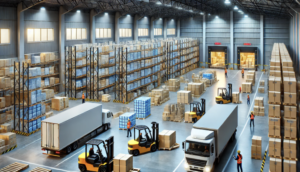
A transportation and logistics center runs on speed, safety, accuracy, and rhythm. Trucks arrive, freight gets cross-docked or stored, orders get picked, and outbound loads roll on time. In the middle of that constant motion sits one of the most overlooked assets in the entire operation: the pallet.
Pallets turn chaos into coordination. They create a standard “unit” that forklifts can lift, conveyors can move, warehouse systems can track, and trailers can cube out efficiently. When pallets are right, a logistics center feels smooth and predictable. When pallets are wrong or unavailable, the whole building can feel like it is working twice as hard to move half as much freight.
Pallets Create the Unit Load That Makes Modern Logistics Possible
A logistics center is built around the idea of handling goods in consistent, repeatable units rather than moving individual cartons one by one. Pallets are the foundation of that unit load concept, supporting product so it can be lifted, staged, wrapped, racked, and transported with minimal touches. The basic idea is simple, but the operational impact is massive. A pallet makes freight compatible with the equipment and infrastructure that a logistics center depends on, including forklifts, pallet jacks, dock plates, racking, and automated systems. 📦
Standardization matters. A common pallet footprint helps a facility plan staging lanes, slotting, and trailer loading patterns. Even when product mixes change, a pallet footprint keeps the building’s physical flow consistent. Over time, that consistency becomes one of the most important drivers of throughput and service reliability. For a clear overview of what pallets are and how they support shipping and storage, see Pallet.
Pallets Protect Freight and Reduce Claims, Rework, and Waste
Damage is expensive in transportation and logistics because it rarely stops at the cost of a single product. Damage can trigger rework, reshipments, returns, chargebacks, missed delivery windows, and customer churn. Pallets reduce damage by keeping product off the floor, creating space for fork entry, and stabilizing loads for handling and transport. A good pallet helps product stay square, stacked, and supported from inbound to outbound without constant repacking.
In a logistics center, freight is constantly moving through high-contact environments: dock edges, staging lines, stretch-wrap stations, lift-truck traffic, and trailer floors. Pallets serve as the protective interface between the product and those hazards. When the pallet is built for the load and maintained properly, it prevents shifts, corner crush, punctures, and partial collapses that can ripple across an entire shipment.
Pallet Quality Directly Impacts Safety and Operational Uptime
A transportation and logistics center is a workplace with heavy equipment, tight turns, and time pressure. Pallet failures create real safety risk. Broken deck boards, protruding nails, and weak stringers can cause load instability, product falls, and equipment strikes. Those events can lead to injuries, blocked aisles, and downtime that disrupts the whole operation.
Pallet quality also affects the lifespan of material-handling equipment. Splintered wood and debris can damage wheels, jam conveyor lines, and create cleanup work that steals labor away from value-added handling. A strong pallet program, including inspection and repair standards, is not a small detail. It is a safety and productivity system that protects both people and throughput. 🦺
Pallets Improve Dock Velocity and Trailer Turn Times
Transportation is a game of time. When a truck sits at a dock, it costs money. Pallets speed up loading and unloading by letting forklifts move larger quantities per trip and by enabling consistent load building. Faster dock velocity improves appointment adherence, reduces detention exposure, and increases daily door capacity without expanding the building footprint.
This matters even more in cross-dock environments where freight is not intended to sit. Pallets allow teams to break down inbound shipments, build outbound loads quickly, and stage by route or destination. Pallets also make it easier to secure freight with stretch wrap, straps, and corner boards so loads travel cleanly and arrive intact.
Industry coverage frequently ties logistics performance to broader freight and supply chain dynamics. For ongoing shipping and supply chain reporting, Journal of Commerce Supply Chain provides a steady stream of relevant news and analysis.
Pallet Management Strengthens Inventory Accuracy and Traceability
A logistics center is not just moving freight. It is also tracking freight. Pallets make inventory more countable because they bundle items into consistent handling units that can be labeled, scanned, and associated with license plate numbers in a warehouse management system. That structure supports more accurate receiving, putaway, replenishment, and cycle counting.
Pallet-based handling also aligns well with modern visibility expectations. Many operations are pushing toward tighter traceability, faster exception handling, and more precise inventory positioning. The more consistently freight is unitized, the easier it is to build dependable scan discipline and reduce “mystery shortages” caused by partial moves, mixed staging, and untracked touches. 📍
For a broader view of the companies and trends shaping transportation coverage, Transport Topics Logistics is a useful reference point.
Pallet Pooling and Reuse Programs Support Sustainability and Availability
Pallets sit at the center of a growing sustainability conversation in logistics. Reuse models and pooling networks can reduce waste, lower the need for new lumber or plastic production, and improve pallet availability in high-volume lanes. Pooling also shifts part of the pallet lifecycle burden away from individual facilities by providing standardized pallets, maintenance, and network distribution.
This matters because pallet availability and condition are operational constraints. When pallets become scarce or inconsistent, logistics centers experience labor drag and service variability. Pooling models can stabilize supply, especially in complex multi-node networks. Recent industry coverage has also highlighted new programs aimed at emissions reduction and supply chain sustainability. One example is CHEP launches Climate Smart Partners programme. 🌱
Pallet Economics Influence Cost Control in Every Lane
A pallet is not just a piece of wood or plastic. It is a cost lever. Pallet choices affect transport efficiency, warehouse labor, product damage, storage density, and even procurement strategy. A logistics center that treats pallets as an afterthought often pays for it through higher waste, slower handling, and more exceptions.
Pallet markets also move with wider economic conditions, including materials pricing and trade uncertainty, which can show up in procurement availability and replacement costs. Logistics centers that monitor the pallet market and plan for volatility protect service levels during periods of shifting supply. Coverage like Year-end pallet market survey report finds 2025 impacted by shifting tariff guidance, market uncertainty reflects how pallet conditions can track broader logistics pressure points.
Pallets Enable Automation and Higher-Throughput Warehouse Design
As logistics centers modernize, pallets become even more important, not less. Automation depends on consistency. Automated storage and retrieval systems, pallet conveyors, robotic palletizers, and high-speed sortation require predictable pallet footprints and reliable structural integrity. A warped, broken, or inconsistent pallet can stop an automated line and create cascading downtime.
This is one reason pallet standards, pallet maintenance, and pallet sourcing strategies have gained more attention in modern distribution operations. Pallets are the physical interface between product and automation. When that interface is strong, facilities can scale throughput without scaling chaos. For a look at how the pallet landscape continues to evolve in distribution and 3PL environments, 7 biggest trends shaping the pallet landscape in 2025 offers relevant industry context. 🤖📦
Conclusion
Transportation and logistics centers succeed when freight moves safely, predictably, and efficiently from inbound to outbound. Pallets make that possible by standardizing how goods are handled, reducing touches, protecting product, improving dock speed, strengthening inventory control, and enabling automation. They also shape sustainability outcomes and cost performance in ways that compound across every shipment and every shift.
A pallet program is not a side project. It is a core operating system inside the warehouse. When pallets are treated with the same seriousness as labor planning, dock scheduling, and transportation execution, the entire logistics center gains stability, speed, and resilience. ✅